

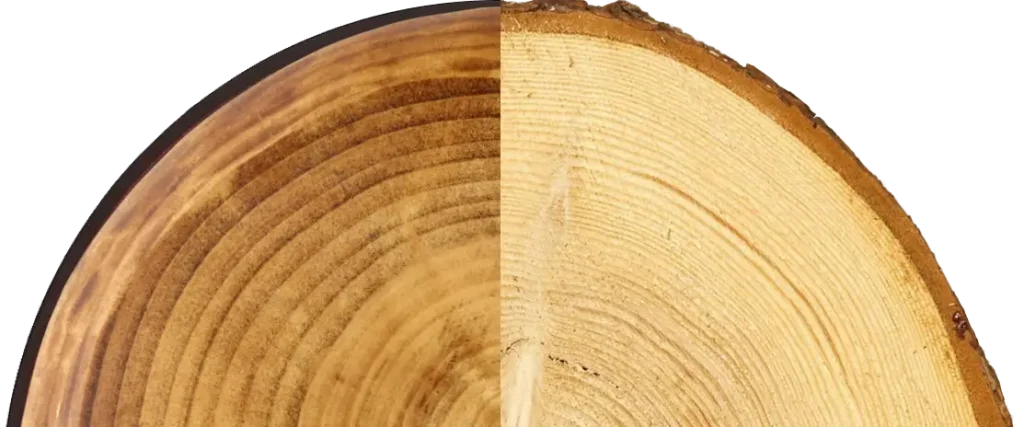
Softwoods originate from gymnosperm conifers with needle-like leaves and exposed seeds, growing rapidly for abundant supply, while hardwoods come from angiosperm deciduous or broadleaf trees with enclosed seeds and slower growth for denser structure.
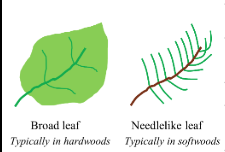
In India, teak and sal dominate hardwoods for premium uses, whereas imported pines fill softwood needs amid limited local conifers.
Softwoods feature straight grain, lighter weight, and resin canals, enabling easy machining but lower shock resistance compared to hardwoods’ complex vessels, rings, and higher density for superior strength.
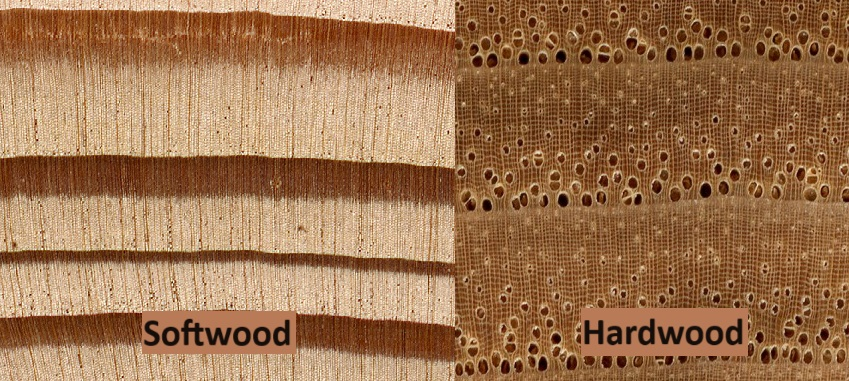
Janka Hardness quantifies this: softwoods average 400-1000 lbf (e.g., Radiata Pine at 630 lbf), while hardwoods range 900-3000 lbf (e.g., Indian Rosewood at 1430 lbf).
Popular Softwoods: Radiata Pine (fast-growing, New Zealand exports for framing/pallets), Douglas Fir (construction beams), Spruce (paper, light framing).
Popular Imported Hardwoods: Oak (flooring, Europe/North America), Maple (cabinetry), Mahogany
India relies on its managed natural forests and plantations for teak (Tectona grandis, Janka ~1000-1155 lbf, golden-brown, water-resistant) and sal (Shorea robusta, 880-1050 kg/m³, fibrous for construction). Softwoods include local Deodar Cedar (Cedrus deodara, Himalayan) and Chir Pine (Pinus roxburghii), plus imports like Radiata Pine for affordable plywood/frames amid rising teak costs. Rosewood (Dalbergia latifolia, vulnerable, dark close-grained) suits luxury exports.
| Aspect | Softwoods (e.g., Radiata Pine, Chir Pine, Spruce) | Hardwoods (e.g., Teak, Sal, Indian Rosewood) |
| Botanical Origin | Gymnosperms (conifers), evergreen needles | Angiosperms (broadleaf), deciduous |
| Growth Rate/Density | Fast (20-40 yrs), 400-900 kg/m³, | Slow (50+ yrs), 800-1200 kg/m³, Janka 900-3000 lbf |
| Janka Hardness | Janka 400-900 lbf (~1.8kN – 4kN) | 900-3000 lbf (~4kN – 13.35kN) |
| Appearance | Pale yellow-white, straight subtle grain, knots | Golden-brown to dark red, prominent pores/rings |
| Heartwood | Light brown/yellow, resinous | Dark golden/reddish-brown, oil/tannin-rich |
| Sapwood | Wide pale yellow-white band (20-50% of radius), high moisture, perishable | Narrow creamy-white (5-15% of radius), less valuable, quick decay |
| Workability | Easy to cut/shape, glues well, paints easily | Harder to machine, polishes to high sheen |
| Durability | Moderate decay resistance, needs treatment | High natural oils/resins, termite/pest resistant |
| Global Cost/Uses | Low cost ($300-600/m³), framing/paper | Premium ($1000+/m³), furniture/flooring |
| India Cost/Uses | Affordable imports (Radiata Pine pallets Rs.₹600/cft), plywood/cheap furniture | Expensive (Teak Rs.₹5500/cft onwards), doors/cabinets/exports |
As you can see, Janka Hardness is the indicator of how hard a wood is which helps in categorising the timber into Softwoods and Hardwoods.
The Janka hardness test evaluates wood resistance by measuring the force needed to push an 11.28 mm (0.444-inch) steel ball halfway into a sample, perpendicular to the grain. Results appear in pounds-force (lbf) or kilonewtons (kN), reflecting denting and wear durability.
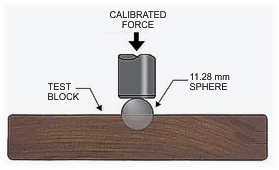
The standard Janka hardness test uses 12% moisture content and a 100 mm² indentation area.
At Harsha Timbers, we specialise in stocking several premium hardwoods primarily sourced from Indian forests, including Acacia, Teak, Rosewood, Honne, Matti (Indian Laurel), Sal, Yellow Teak (Haldu), and Dhaval (Camphor Laurel). The table below lists these timbers with their respective Janka hardness ratings (in lbf), compiled from reliable wood databases; note that exact values can vary by specific species and growth region, and some less common Indian variants have limited data
| Timber Type | Janka Hardness (lbf) |
|---|---|
| Acacia | 1,100–2,500 |
| Teak (Saagwan) | 1,070–1,155 |
| Rosewood (Seeshum) | 1,700–1,780 |
| Honne (Indian Kino) | ~1,900 (est.) |
| Matti (Indian Laurel) | ~1,200 (est.) |
| Sal (Tadsal) | 1,300–1,500 (est.) |
| Yellow Teak (Haldu) | 1,200–1,400 (est.) |
| Dhaval (Camphor Laurel) | 950–1,100 |